Saturday, February 25, 2006

Restoration, Preservation, and a Grand Opening

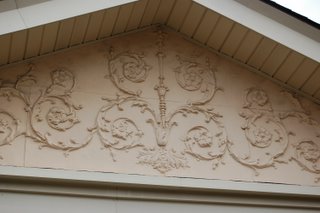
It was a busy day in New Albany. The restoration of three storefronts began in the 300 block of Pearl Street. As you'll see below, an intact cast-iron column was uncovered. Be sure to stop by to check on progress in the coming weeks.

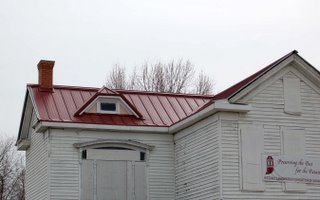
The Cardinal Ritter House restoration is progressing. The roof is complete and new windows are being installed.

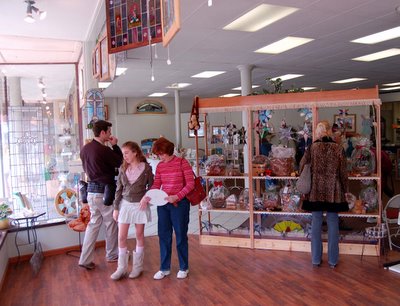
Louisville Stained Glass held their Grand Opening to a steady and robust crowd.

Enjoy the pictures.


Housing Quality - continue the thread

Visit the S. Ellen Jones Forum to continue the brainstorming on housing quality in New Albany.

http://sellenjonesna.blogspot.com/

Sunday, February 19, 2006

It's cold, here are more pictures

"IT'S COLD"! So I dipped into the archives and pulled out pictures once again exhibiting the richness of our history and heritage in New Albany.


Friday, February 17, 2006

Historic Housing Quality in New Albany

Housing quality is a major issue in the historic neighborhoods of New Albany. Has been for a long time. Will be for a long time to come. City enforcement of building codes and ordinances is a part of the solution. We, as residents of this City, can also be part of the solution.

The below excerpts are from an article published in News from the National Alliance of Preservation Commissions titled Hands On Athens (Georgia): A Successful Low Income Rehabilitation Partnership.

"It doesn’t always take big bucks or ton of time to make a difference in low income historic housing. With the collaboration of historic preservation nonprofits, local government, environmental organizations, schools, churches, and community members at large, a great deal can be accomplished to protect low income resources. Hands On Athens aims to do just that – and throw in a little preservation education at the same time. The mission of Hands On Athens is to create a coalition of organizations dedicated to assisting low income Athens-Clarke County, Georgia homeowners in historic neighborhoods to maintain, repair, and preserve their properties as part of overall neighborhood revitalization."

On Facing Challenges....
"While most of the time Hands On Athens runs smoothly, it is presented with its share of challenges. One of the largest difficulties is that, due to the growing rental rate in the target areas, it can be a struggle to find owner-occupied homes to be recipients of the program’s services. Fortunately, working with neighborhood development corporations helps alleviate much of this suspicion. Other challenges present themselves with applicants not fully understanding application guidelines and the scope of work possible, but many of these issues can be avoided through proper procedures, education, and communication."

Further Reading:
http://www.achfonline.org/handsonathens.html

The Kentuckiana region has a version of Hands On Athens in the Repair Affair program which is sponsored by New Directions Housing Corporation. Check back here soon for more information on this program and efforts in our neighborhoods.

New Directions Housing – Repair Affair http://www.ndhc.org/repair.html

Further Reading:
National Alliance of Preservation Commissions http://www.uga.edu/sed/pso/programs/napc/napc.htm

Monday, February 13, 2006

Community Development Block Grant Info

Please visit the S. Ellen Jones Neighborhood Association web log for information on the upcoming CDBG Planning Meetings.

http://sellenjonesna.blogspot.com/

Thursday, February 02, 2006

My History in New Albany

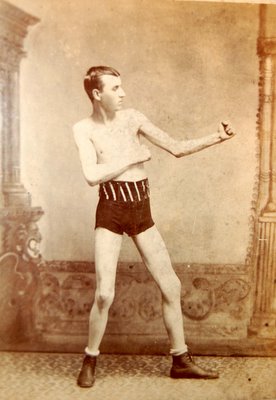
Say hello to my Great Grandfather David Millard Tuell - born February 19, 1873. I’m not sure how many boxing matches he won. My guess is a stiff breeze could have taken him in about 3 rounds.


David was a twin (he’s pictured with his brother Dennis below).
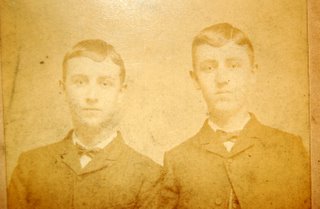


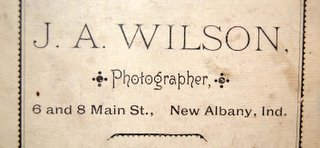
They were born and raised in Harrison County. The pictures were taken in New Albany probably between 1885 and 1890. I imagine a trip to New Albany was a pretty big deal for a farm boy from Harrison County. As a frequent visitor to downtown myself I'm pretty sure I've walked in his footsteps more than once. I guess that's one reason I'm a little freaky about this town.


The weather has been nasty lately and I’ve been busy, but I am working on a nice photo collection of the wrought iron of New Albany. Stay tuned.

Saturday, January 28, 2006

"Nothing to see here, please move along..."

New Albany's finest wouldn't allow me to get close, but I snagged the below pictures of our K&I Bridge, the good barge gone bad and a big bird (heron).

This certainly qualifies as a historical event in New Albany. I should also note that if I'd had a hot dog stand open, I would have made a barge load of money. The barge was quite a draw.


Sunday, January 22, 2006

A few of my favorite things....

I started a walk around town on an unseasonably warm January day and below are the results. At first I was just going to shoot signage downtown, but then I started shooting everything I saw. Consider it unabashed and unashamed promotion of what a simple walk to OUR Downtown can yield.


Thursday, January 19, 2006

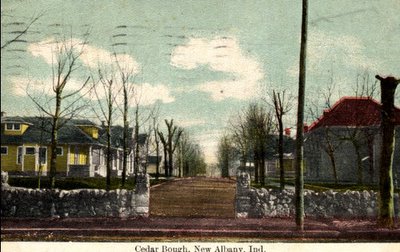
Meet - Cedar Bough Place Historic District

The following is taken from the "Historic District Design Guidelines City of New Albany". The Guidelines not only provide homeowners direction on exterior work to their property, but also include short histories of each of our four local historic districts.

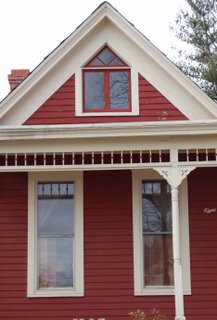
Cedar Bough Place, aka "the Bough", is where I live. Simply walk or drive straight up 13th Street and cross over Ekin and you will be on the Bough.
___________________________________

The Cedar Bough Place Historic District consists of the houses on Cedar Bough Place, a short private street that runs between Ekin Avenue and Beeler Street. It is one of only a handful of private streets remaining in the city of New Albany.

When Lot 42 of the Illinois Land Grant was divided, Cedar Bough Place was laid off into lots, roads, etc. and sold on the 17th day of September, 1836 by Margaret Loughrey with the following provision: “and I hereby certify all roads, alleys, streets, etc., laid off of said ground to be for the common benefit of the purchasers and owners of said lots.” The streets and alley were not to be opened to the public without the consent of the majority of the property owners.

The land remained undeveloped until the late 19th century, probably held for speculative purposes. When development began the quality of house construction caused Cedar Bough Place to be considered one of New Albany’s most prestigious addresses. The phrase “living on the Bough” was often heard in New Albany when describing a person or family who had a Cedar Bough Place address.


The neighborhood’s condensed period of development, the short length of the street, and the similar size and scale of homes all contribute to the character of Cedar Bough Place.
Only one lot on the street is vacant, and there have been no modern intrusions. The majority of the homes are very well maintained and in a good state of preservation.

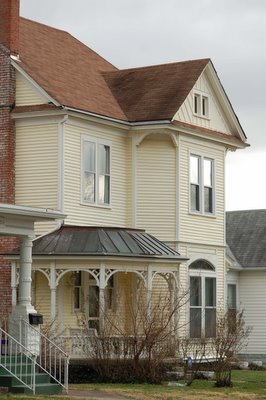
The houses in the district, built between 1890 and 1910, are mostly Queen Anne style homes, as well as cross-plan and composite cottages with Queen Anne detailing. The c.1890 house at 831 Cedar Bough Place is the most elaborate example of the Queen Anne style.

Notable examples of composite cottages are located at 811, 833 and 838 Cedar Bough Place.

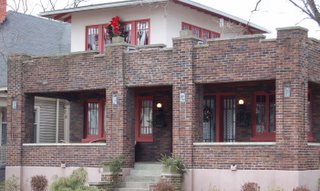
Slightly later styles represented in the district include American Foursquare (821 Cedar Bough Place), Bungalow (836 Cedar Bough Place) and Craftsman (837 Cedar Bough Place).

Notable Cedar Bough Place residents have included: Ferdinand Kahler, founder and president of Kahler Furniture Manufacturing Company (837 Cedar Bough Place); local restaurateur Tommy Lancaster (839 Cedar Bough Place); and F. Shirley Wilcox (837 Cedar Bough Place) who was appointed Indiana's chief of Internal Revenue Service collections by President Harry Truman and later was State Treasurer.

Sunday, December 04, 2005

Ira vs. Myra - the end


Yes, that's our buddy Ira. And this is the third and final installment on his tragic but true tale. Let’s begin with this statement (presented during closing arguments) by Ira’s defense attorney Col. Charles Jewett:
“Do not wonder that though the town was ringing with gossip about Mrs. Strunk, her husband was the last to hear and slowest to believe it. I honor those who do not hear, or little regard the tongue of slander. I know of no place where a greater number of competent persons can be found to attend to other peoples’ business free of charge than New Albany.”

This is New Albany. In 1886.

The Trial

Ira was in jail for 73 days waiting for his trial to begin. In that time he was visited by over 1500 friends!

The trial was a sensation in the region. It began on October 2, 1886. It was open to the public – first come first served. There were mob scenes daily as men and women jockeyed for seats. The trial lasted eight days and 95 witnesses spoke. Outbursts were common from Ira supporters who booed and hissed witnesses and lawyers for the prosecution. Public sympathy was strongly on the side of Ira.

The prosecution took one day to prove, without question, that Ira had killed Charles.

Then the defense team began to spin the web of Ira’s descent into madness. They were relying on a defense of insanity. In testimony from friends and experts, the defense would attempt to prove Myra’s adultery had made Ira mentally unsound. Witness after witness testified to Ira being a “changed man” after being told of Myra’s misdeeds.

He’d given up teaching after making numerous mistakes.
He was unable to concentrate on his duties and was apt to gaze out a window for hours at a time.
He’d made a $1,500 posting error in his position at the Building and Loan.
Friends claimed he’d pass them on the street and not recognize them.
Dr. W. B. Fletcher (Superintendent of the State Insane Asylum) testified that Ira was insane at the time of the killing.

The defense also took on the task of proving that Myra was indeed guilty of adultery. Ten neighbors testified that Charles would wave and blow kisses when walking by the Strunk home. Eight witnesses testified to seeing Charles and Myra walking together and meeting at the church on weekdays.

Then, a single witness (James Shepard) gave testimony to witnessing Charles and Myra engaged in making love in the church. He lived next door to the church and claimed to have twice seen the two through an open door.

Then, after coming close to exchanging blows with the witness, the prosecutor showed that it was impossible to see anything from Mr. Shepard’s claimed vantage point in his home.

Myra Takes the Stand

Myra approached the stand in a plain suit, with her face veiled. She took the stand and was asked but two questions and was not cross-examined. She denied intimacy with Charles, and that he had never made any advances toward her. She was the last witness called.

Closing Arguments

Closing arguments lasted for two days. The following excerpt gives you a sense of how the defense was trying to sway to the jury:

“This man [Ira] fought in defense of a jewel more precious to him than all his goods. He killed Hoover in the protection of what, is to an honorable man, more than life or limb. He shed blood in the highest defense of the State, because in defense of the State’s purest institution, marriage, and it obligations. This man’s shots rang forth as proclamations of the sanctity of hearth, home and church all over this broad land.”

The prosecution closed with the following. Keep in mind that public sentiment was aggressively with Ira and it appears a not guilty verdict was almost assumed.

“A verdict of not guilty will go wherever the winds of the heavens go, it will go bearing sorrow and despair to their [Myra and her children] hearts. Yes, gentlemen, tell your wife and children of the great trial and the pleasure you have in reaching a verdict of not guilty. You may write it, but it will be with the tears of this defendant’s children and the heart blood of his wife. You may liberate him, but he can only walk forth a free man over the prostrate form of his wife and amid the ruins of his children’s home.”

“All I ask of you is to consider, be men, let the maudlin sentiment voiced by this mob be unheeded, redeem your oaths, and may God direct you in your deliberations.”

The Verdict

It only took fifteen minutes.

Seventy three days leading up to the most sensational trial in New Albany’s history. Eight days at trial. Ninety five witnesses. And in fifteen minutes it was over. The jury returned a verdict of not guilty. The Ledger even reported the jury took tea to Ira at the jail. How quaint.

The day after the verdict Ira was released after another jury declared him sane. Ira was a free man.

Did Myra and Charles have an affair? Or did gossip, jealousy, and the wild imaginations of New Albanians eventually prod Ira to his killing spree? You can draw your own conclusions.

Postscript

Ira moved on with his life. He returned to his position at the Business College and moved into a home in Silver Hills. In 1907 Ira moved to California, returning to New Albany in 1911. He took up residence at 1502 E. Market and remained there until his death in December 1937.

His final resting place is at Fairview Cemetery. There’s an empty plot next to him, obviously intended to be for Myra.

After the trial, Myra left with her children and widowed Mother for western Pennsylvania – to the town where she had been born 35 years earlier. She would never return to New Albany.
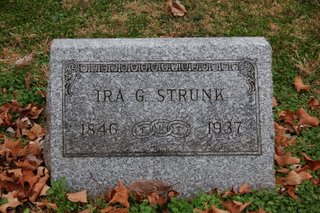


The grave of Ira G. Strunk at Fairview Cemetary. He'd purchased a plot next to him for Myra, which is empty.
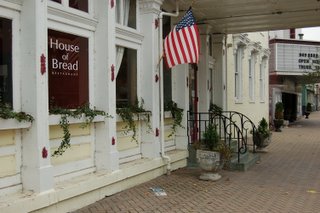
The New Albany Inn – Ira lunged from this spot sprinting for two blocks and killing Charles Hoover and wounding Dr. Hoover.