Wednesday, May 31, 2006

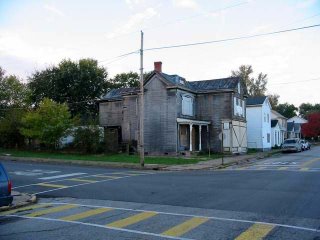
831 Cedar Bough Place old Photograph


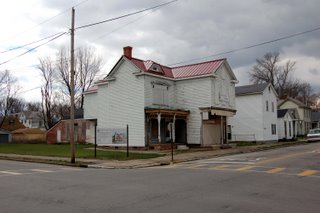
Thanks to David Barksdale, Floyd County Historian, we have a picture of 831 Cedar Bough Place from 1909. This property is currently listed for sale by owner.

See http://www.historicnewalbany.com/ for details. The property is fire damaged and has been the subject of a couple of past threads.

meet-cedar-bough-place-historic-district

The detail on the photo is not the best but it does confirm that nearly all the architectural features on the front of the home are intact. The small gable on the front porch has been altered some. Feel free to cut and paste the picture from this site and blow up to see more detail.

Even while fire damaged it is still an impressive home. It’s worth saving.

If you have questions please contact the property owner. Historic Landmarks Foundation of Indiana (284-4534) may also be able to provide information on the damage to the property. Representatives have toured the home since the fire.

Sunday, May 28, 2006

A Window Reborn

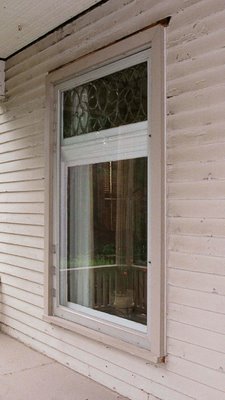
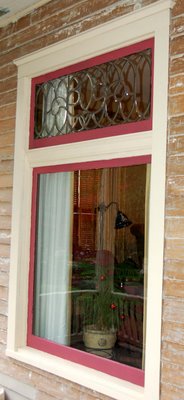
It's been about one year since I peeled the vinyl off of my home. Some days I question the decision. But not today. This was the condition of my homes front window - it was wrapped in aluminum, covered by a massive storm window and the top trim had been hacked away.

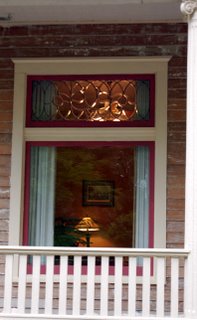
Today the first coat of primer went on a newly restored window. It's a pretty dramatic transition if I do say so myself.

Please no comments about the ornaments on the little tree in the window. I suppose that little piece of Christmas spirit just hung around a wee bit longer than it should have.

Anyway, if you have not signed up for the Window Restoration Workshop this Tuesday please do so. You'll learn from a professional (definitely not me!) about how to restore your historic windows.

Tuesday, May 30 Progressive Pizza and Preservation: Hands-on Repair of Historic Windows

Learn to care and repair historic windows. Topics to be covered: removing sashes, removing old glazing and glazing application techniques, repairing sash weights and ropes, and making minor window repairs.

*Presenter: Patrick Rymer, C & S Painting Co.

*6:15 PM to 8:30 PM

*Carnegie Center for Art and History, 201 East Spring St, New Albany

*Sponsor: New Albany Historic Preservation Commission.

*Free and open to public.

*Limited to 35 participants. Reservations required by calling Historic Landmarks Foundation of Indiana 284 4534.

Friday, May 26, 2006

Preservation Month Events You Need to Attend

Saturday, May 27
Scribner House - open for visitors.
The oldest surviving building of any kind in New Albany, the Scribner House was built in 1814 by Joel Scribner. Joel Scribner, one of the city's founders, built this first frame house in the brand new river town.
*11:30 AM – 1:00 PM.
*Free and open to the public.

Saturday, May 27
Mansion Row Walking Tour, New Albany
Hear “live stories” from “Women of Main Street.”
*1:00 PM – 3:00 PM.
*Meet at Scribner House, corner of State and Main streets, New Albany.
*Tour Leader: Dave Condra.
*Sponsor: Floyd County Historical Society.

Tuesday, May 30
Progressive Pizza and Preservation: Hands-on Repair of Historic Windows
Learn to care and repair historic windows. Topics to be covered: removing sashes, removing old glazing and glazing application techniques, repairing sash weights and ropes, and making minor window repairs.
*Presenter: Patrick Rymer, C & S Painting Co.
*6:15 PM – 8:30 PM.
*Carnegie Center for Art and History, 201 East Spring St, New Albany
*Sponsor: New Albany Historic Preservation Commission.
*Free and open to public.
*Limited to 35 participants.
Reservations required by calling Historic Landmarks Foundation of Indiana – 284 4534.

Wednesday, May 24, 2006

Downtown Ball State Project Completed

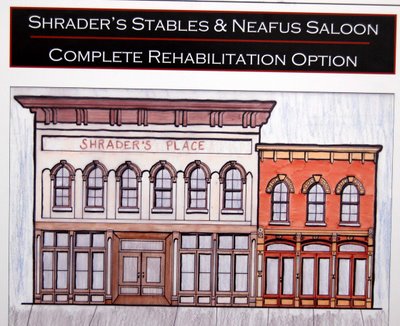
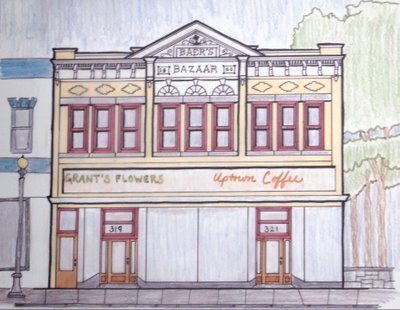
As was reported back in October (see post more-news-after-darn-busy-week) Develop New Albany had partnered with Ball State Universities Center for Historic Preservation to conduct assessments and renderings of three downtown buildings. This evening they unveiled the results.

Ball State student, Jennifer Mastri, led the presentation.

Below are three stunning renderings of possible restoration options for the Shrader Stables (which will be located directly across the street from the YMCA), the Baer Bazaar and the Reisz Building.


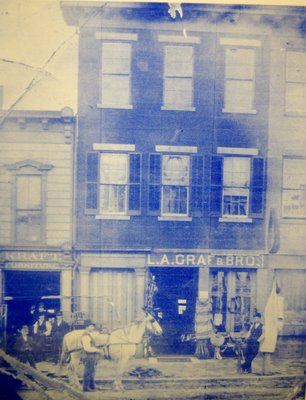
Floyd County Historian, David Barksdale, provided a surprise for the evening with a blown up vintage photo of the left side of the Reisz Building that he only recently discovered.

Tuesday, May 23, 2006

Not many postings - Preservation Month goes on

Time has been in short supply lately due to some home improvement projects and life in general.

Please don't forget about upcoming Preservation Month events. Saturday features a Mansion Row Walking Tour. Next Tuesday is the last Pizza and Preservation Workshop (Repair of Historic Windows). See all the details at http://www.historicnewalbany.com/

There has also been some action on a previous post about the Cedar Bough Historic District

meet-cedar-bough-place-historic-district

Discussion has been going on about a tragic house fire at 831 Cedar Bough Place. You can view a photograph and listing of the property in the residential section at http://www.historicnewalbany.com/

Sunday, May 14, 2006

Preservation Conversation and Destination

It's Preservation Month - Full Throttle!
Tuesday features a Workshop (see previous post) and Wednesday is our second Preservation Conversation of the month.

Wednesday, May 17
Preservation Conversation: Filling Holes in New Albany’s Downtown Historic Fabric

Focus on the implications and strategies for filling the gaps in downtown’s streetscapes and neighborhoods.
Panelists: John Miller, Community Housing Development Organization; Mark Dollase, Vice President, Preservation Services, Historic Landmarks Foundation of Indiana. Panel forum facilitated by Ted Fulmore, Chair, New Albany Historic Preservation Commission.

*7:00 – 8:30 PM.
*Destinations Booksellers, 604 E. Spring Street, New Albany.
*Free and open to the public.

For a full listing of events this month, please visit: http://www.historicnewalbany.com/

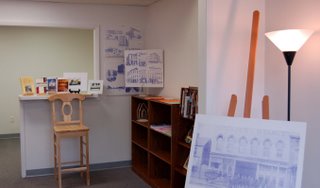
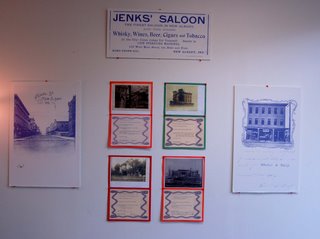
While at Destinations_Booksellers make sure to drop into "Preservation Destination". Randy and Ann have donated space for the display of historic photographs from New Albany's past. Also on display are the perfect books for preservation minded individuals. Visit this month!

Friday, May 12, 2006

Preservation Workshop #2 On Deck!

The first preservation workshop “Unlocking the History of your Historic Home” was a hit. The unofficial head count was 28. Attendee response was positive and many began their own research right after the workshop concluded. Look for this topic to be repeated in the future.

Make your reservations now for next Tuesday’s workshop:

May 16th
6:15 PM – 8:30 PM.
Rich O’s Public House, 3312 Plaza Drive, New Albany

Progressive Pizza and Preservation: Paint Your Historic House Beautiful
Learn the basic guidelines for selecting the appropriate colors for historic buildings.
Bonus tips from the presenter on interior and exterior finishes and techniques to give you professional results.

*Free and open to residents of New Albany and surrounding communities.
*Sponsor: Porter Paints.

Reservations required by calling Historic Landmarks Foundation of Indiana – 284 4534.
Participants purchase own beverages. Limited to 30 participants.


Monday, May 08, 2006

First Preservation Workshop is Tuesday, May 9th

Sign up now! Openings are still available.

Tuesday, May 9
Progressive Pizza and Preservation: Unlock the History of Your Historic Home.

First workshop in New Albany’s May series of preservation workshops.
Designed for homeowners of historic property and anyone interested in history of property in their communities or neighborhoods, you learn the most efficient steps through the research process and the best resources for finding what you want to know. Presenters: Dave Barksdale, Floyd County Historian; Linda Berger, Floyd County Recorder; Betty Menges, Asst. Manager, Indiana History Room and Lynn Rueff, Manager, Indiana History Room, New Albany Public Library.
*6:15 PM – 8:30 PM.
*Carnegie Center for Art and History, 201 East Spring St, New Albany, for pizza and introduction to researching, dating, and identifying your home’s past. From the Carnegie Center, you go to the New Albany Public Library to research your own property.
*Sponsor: East Spring Street Neighborhood Association.
*Free and open to public.
*Limited to 20 participants. Reservations required by calling Historic Landmarks Foundation of Indiana - 284 4534.

Wednesday, May 03, 2006

Historic Lunch Downtown


It wasn't really historic, except for the fact that it was my first visit to "Bistro New Albany" at the corner of Bank and Market Streets in downtown New Albany.

I'll echo the sentiments of many others and say that you simply must go check it out. They've only been open for three days but you could hardly tell that based on the large crowd, good service and excellent food. No dinner hours yet, but they are expected in the next week or two.

Our city council did pass the Riverfront Development Area ordinance on Monday which makes it even more likely that the simple act of eating downtown (in a restored building) will become much easier and frequent. But it's hard to imagine another eatery capturing the charm of the courtyard at the Bistro. It was wonderful. And of course the draft beer selection, anchored by our very own New Albanian Brewing Company, was the icing on the cake.

Tuesday, May 02, 2006

Preservation Month Activities

See a full list of Preservation Month activities at www.historicnewalbany.com
Pick out your new historic home while you are there!

Mark your calendar for the next event - Wednesday, May 3

Preservation Conversation Forum: What’s Next for New Albany’s Older and Historic Neighborhoods.

*7:00 PM – 8:30 PM.
*Destinations Booksellers, 604 E. Spring Street, New Albany.
*Contact - Randy Smith - 944-5116.
*Free and open to the public.

Friday, April 28, 2006

More photos from our National Cemetery


Here are some more pictures from a foggy early morning visit to the New Albany National Cemetery.

Saturday, April 22, 2006

Civil War and a Final Resting Place

When Civil War erupted in 1861 New Albany was recognized as an asset to the Union. It was a center of trade, boat building, steam engine construction and the outfitting of ships of war. Early in the war correspondence was frequent between the Secretary of War Edwin Stanton and the Mayor of New Albany. The Union needed our help and got it.

Assessments at the time show that New Albany was one of only five shipyards on the Ohio. The following was taken from a memorandum for Lieutenant-General Scott in June 1861 (1)

Building-yards for boats.--The principal boat-building places on the Ohio River are: (1) Pittsburg, Pa.; (2) Wheeling, Va.; (3) Cincinnati, Ohio; (4) Madison, Ind.; (5) New Albany, Ind.; (6) Mound City, Ill.

Regiments were mustered here. Supplies for the Union Army were stored here. The Ohio River was the highway to the South. New Albany was a key stop on that highway and critical to sustaining the Union Army.

The city was also a site designated for the care of wounded soldiers. Eleven hospitals were in operation during the war years. At any given time up to fifteen hundred wounded soldiers were located here during the war. After each major battle in the Western theater of the war, steamships would arrive and disgorge the maimed men from recent battle.

Nearly all the local school buildings were converted to hospitals. Woodward Hall, 128 West Main Street, was also converted to a hospital.
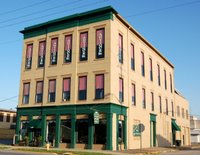

Woodward Hall is one of the few remaining structures in New Albany that served as a hospital.

Following the Battle of Perryville (also know as Chaplin Hills) which took place on October 8th, 1862, New Albany received a large group of wounded. The Ledger reported a listing of soldiers being treated in New Albany hospitals on October 15th(2).

One soldier arriving in October was Private Augustus Huff, from the 42nd Indiana Regiment. Census records from 1860 show that Augustus was a school teacher in Greer Township in Warrick county Indiana. He was 27 years old, his wife was Harriet and he had a six year old son.

Augustus was wounded at Perryville. His regiment was involved in bloody hand to hand combat. Total losses reported for the regiment were 174 killed, wounded and missing - over 1/3 of the regiment of 490 (3). He was sent to New Albany to recuperate. The sight of the quaint river town must have been comforting to him and other wounded compared to the sights and sounds of battle. Our city was a site of refuge.

Private Augustus Huff would recover from these wounds, only to return one final time in 1864 to be buried in the New Albany National Cemetery located at 1943 Ekin Avenue. I recently visited the resting place of Augustus (section B, plot 1486). He earned our thanks and respect.
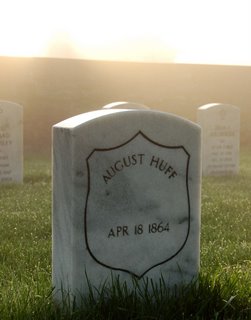


The cemetery is a hauntingly beautiful place. It was a foggy spring morning when I paid my respects there.


As the weather warms seize the opportunity to take the walk from our riverfront, past Woodward Hall and then to the National Cemetery. It’s a long but rewarding stroll. Many young men took the same route between 1862 and 1865. But they never got to take the walk back home.


(1)Union Correspondence, Orders, And Returns Relating To Operations In Southwestern Virginia, Kentucky, Tennessee, Mississippi, Alabama, West Florida, And Northern Georgia, From January 1, 1861, To June 30, 1865.

(2) New Albany Daily Ledger 15 Oct 1862 p2 c3: Sick and Wounded from Perryville, transcribed at Southern Indiana Genelogical Society website http://www.rootsweb.com/~insigs/

(3) 42nd Indiana Volunteer Infantry website http://www.geocities.com/indiana42nd/

see also website for the New Albany National Cemetery
http://www.cem.va.gov/nchp/newalbany.htm

National Cemetery Teaser

Good Morning New Albany.

Here's a teaser picture from a post I'm working on involving the New Albany National Cemetery. Enjoy and have a great weekend.

Tuesday, April 18, 2006

Preservation Month - Begins April 25th

Preservation Month (May) activities are here! We actually kick things off in April this year with the Floyd County Historical Society meeting next week. Be there to hear Greg Sekeula speak about Historic Landmarks Foundation of Indiana.

April 25 Preserving the Past – the work of Historic Landmarks Foundation of Indiana.
Learn about the accomplishments and challenges during 30 years of preservation efforts in southern Indiana. Presenter: Greg Sekula, Director, Southern Regional Office, Historic Landmarks Foundation of Indiana.

This meeting kicks off Preservation Month 2006 that continues throughout the month of May. Designated by the National Trust for Historic Preservation, the national celebration of historic preservation celebrates this year’s theme: Sustain America-Vision, Economics, and Preservation. Participants learn about the events celebrating preservation in southern Indiana.

*7:00 PM
*Elsa Strassweg Auditorium, New Albany Floyd County Public Library, 180 West Spring Street, New Albany
*Free and open to the public.

Sunday, April 09, 2006

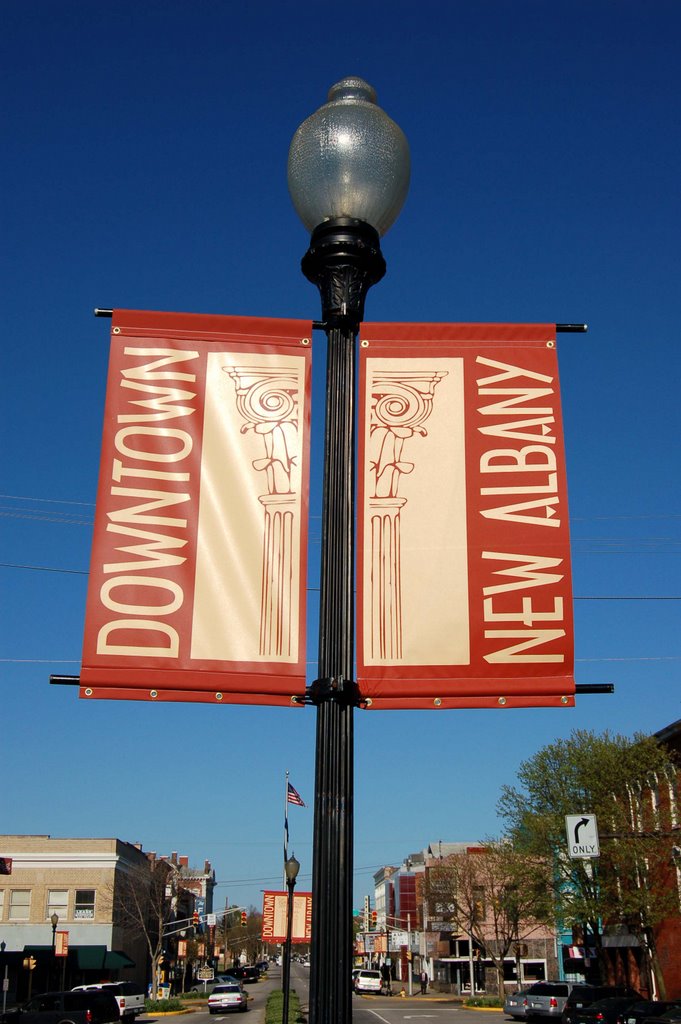
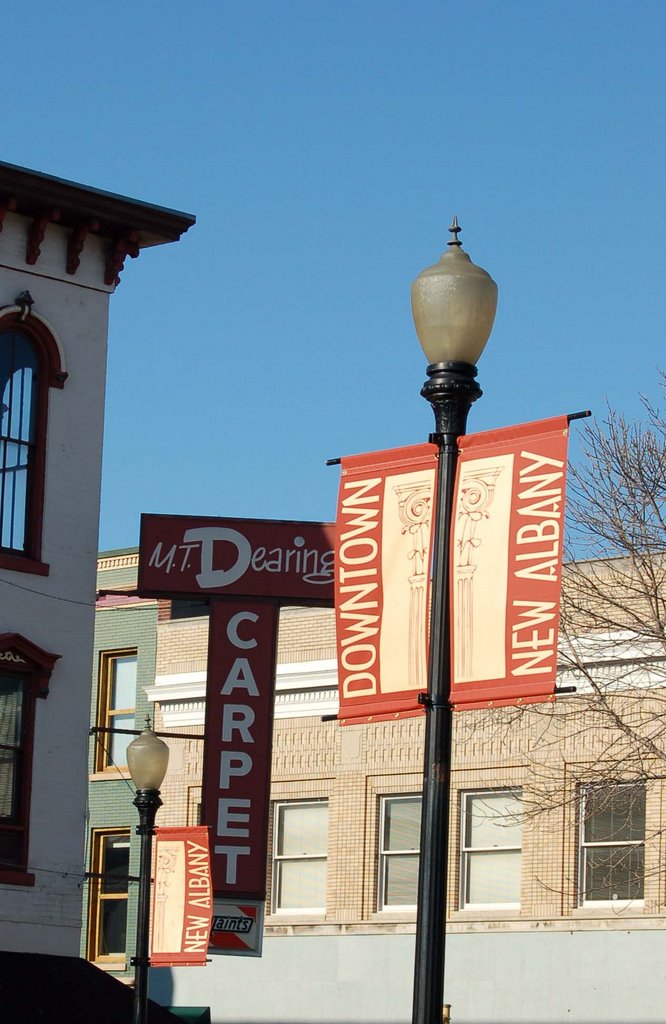
Banners Up in Downtown

Have you seen our new banners Downtown?

They are a great addition to Downtown and add a touch of class to the area. Thank you Develop New Albany.


Wednesday, April 05, 2006

Spanish Moss - Historic Architecture - Big New Bridge

I took a recent trip to Charleston, South Carolina. It's a favorite destination of mine because of the history and heritage there. Heritage tourism is big money and New Albany certainly has its share of desirable places to visit. Are we marketing ourselves properly? Your thoughts, please.

Enjoy some pictures from the trip - especially the incredible new bridge - which includes an expansive pedway. It's truly an impressive piece of engineering and architecture. Take a close look and you'll see the old bridge being dismantled in the background.


Sunday, March 26, 2006

Blight takes a holiday

Progress has been steady at the Cardinal Ritter Birthplace at 13th and Oak Streets. It's a good time to take a look back two years ago and see where this house was compared to where it is today.


The front porch restoration has been the most recent work.

To get more information on the Cardinal Ritter Birthplace Foundation visit their site at http://www.cardinalritterhouse.org/

Please consider a donation to help with this incredibly important project.

Part 3 - The Rise and Fall of Market Street Brewery


In Part 2, we established that Building B was indeed still with us. I’m also happy to confirm that Building A - Ice House and Fermenting Cellar- is also still here. It is located at 309 East 10th Street (larger building to the left). I make this conclusion with the help of David Barksdale, Floyd County Historian. We made this determination based on the following.


Features dating the building to 1875

-The rosettes on the anchor bolts match on both buildings


-The wide frieze on both buildings match


-Sanborn Insurance map building profiles match from 1886 to 1949

I’m still searching for an older photo of site for total confirmation, but am comfortable stating the building is original.

Building A (Ice House & Fermenting Cellar) Current and Past

The building has been heavily modified since 1875. The exterior walls have stucco applied, which would not be original to 1875. Breaks in the stucco reveal brick work consistent with building B. The windows also are not original to the structure. We believe the inset layer of bricks in the window sills date the modification to the 1920’s. Other clues also date the modification to the late 1920’s.

The interior first and second floors are apartments and in pretty rough shape. The current owners are in the process of remodeling. Again, the interior trim and construction materials date to the 1920’s.

The trail of deeds on the property confirms when the building was remodeled to what we see today:
-The estate of Barbara Buchheit to John Werle (1892)
-John Werle to Simon Haskell (1928).

We believe that Mr. Haskell converted Building A to apartments. We base this on the fact that the 1929-30 city directory shows multiple tenants at the address for the first time.

Down in the Basement

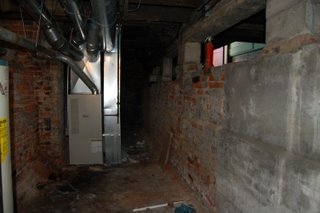
The basement is very impressive and an obvious storage facility. The basement remains relatively intact. It consists of five long rows separated by brick walls running east to west with an open center row down the middle. Each row is approximately four feet wide. The floating brick walls separating each row are about sixteen inches wide. The floor is concrete.


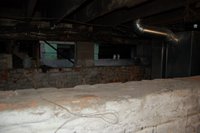
In the center row, towards the front of the building, is an opening in the floor. An unmistakable arch of cut stone is visible through the opening. It’s a small opening – just wide enough for some brave spelunker to wiggle into.

We have not explored this opening yet. The building does not have electricity at this time, so the exploration is just going to have to wait at least two or three weeks. But that won’t stop me from theorizing what may lie beneath the basement.

We know the brewery produced lager and that lager ferments at cold temperatures (five to six weeks at about 33 degrees Fahrenheit). They would have needed plenty of space to store the beer. So it is entirely plausible that beer vaults exist down there.

It is also possible we are looking at a cistern that captured runoff water from all the ice used to keep the beer cold. It may also be a well dug to supply water to the brewery. Whatever it is, it appears an opening was left for the purpose of putting garbage in it. So we may have a well, cistern or beer vault filled in with 150 years of rubbish. We will find out eventually.

One additional feature is on the north basement wall (bordering building B). There appear to have been two openings leading to the basement of building B (or to a possible storage vault). They are bricked in now but the arches are clearly visible. Again, this is speculation, but one could theorize that one opening led to the basement of building B and that another led to stairs our possible vault.

The Site as a Brewery

The site sure had a good run as a brewery – thirty four years. From 1856 to 1890, beer was produced at Market and 10th Street. .

After Peter Buchheit’s (brewery founder) death the brewery went through some turbulent times. His wife Barbara took over operations for a period of time, then it went through a series of different managers until closing for good in 1890.

Timeline for brewing at the site (1)
Peter Buchheit, Market Street Brewery (1856-1876)
Barbara Buchheit (1876-1884)
Julius Gebhard and Co. Enterprise Brewery (1884-1886)
Charles Burger, New Albany Brewing Company (1886-1888)*
Andres Schlosser, National Brewery (1888-1890)

The following Ledger story documents one of these changes in management in 1886.

Daily Ledger, August 7, 1886
New Albany Brewing Company
(Successors to Gebhard & Co.)
"Leading Brewery in New Albany"

The New Albany Brewing Company do business on East Tenth, between Market and Spring streets, and it is one of the busiest places in the city. In the reorganization of this Company, Messers. Charles Burger, and Herman Kirhhoff, of Cincinnati, are added to the firm. Mr. Burger is a gentleman of considerable wealth and becomes president of the company. Mr. Kirhhoff assumes the responsible position of Secretary and Treasurer. Mr. Julius Gebhard, one of the most experienced brewers in the Western Country, takes the position of Superintendent. It is not necessary to state that under this efficient management the New Albany Brewing Company will enjoy a liberal patronage and justly rank among the leading breweries of Southern Indiana. Mr. Frank Gebhard, a young man of genial social disposition, continues the new firm and his many good traits of character will add to the already growing and prosperous business of the company….

During the past few days the business of this firm has increased wonderfully, and the superior quality of beer turned out it gradually gaining them an extensive shipping trade. Their sales embrace the city and extend all over Southern Indiana. A large and improved refrigerator has been placed in the cellars and many other needed improvements have been made, which combine to afford them the necessary facilities to compete with the leading breweries in this section the country.

The New Albany Brewing Company is brewing now a superior lager beer for which on imported hops and the best quality barely malt is used. There is a large and increasing demand in New Albany and the surrounding country towns for such a fine quality beer.

This excerpt from the Ledger, August 23, 1890 tells of the end of our brewery and the start of another:

The Indiana Brewing Company is making many improvements to its property on East Main Street, above Vincennes. Several additions to the building have been made and the company has contracted for 500,000 bricks for the erection of the other buildings this fall. The company purchased the Buchheit brewery material sometime ago and is transferring it to their present large plant. Mr. Gustav Weinmann is the energetic and enterprising general manager of this extensive brewery.

This has been a fun project with a rewarding outcome. New Albany has the distinction of having two structures remaining from a brewery dating to 1875. The buildings are in good shape and will be with us for a longtime to come.

For more information on New Albany breweries, please visit the New Albany Floyd County Public Library (Indiana Room). They have a file full of newspaper clippings and other assorted information on our brewing past. Just ask the librarian for the Brewery file.

A more polished version of these postings will be added to that file. There will also be a fourth posting once the basement is fully explored.

1. Peter R. Guetig and Conrad D. Selle. Louisville Breweries p.9
(* I added this line based on the Ledger article from 8/7/1886)

Saturday, March 18, 2006

Part 2 - The Rise and Fall of Market Street Brewery

A recent trip to the brewery site revealed some secrets.

First, the building designated as “B” is still standing today.


It is 315 E. 10th Street and now serves as a church. In 1886 there was storage on the first floor and the grain room on the second floor. The building dates to approximately 1875 and has been altered significantly. However, features do remain which confirm its brewing past.

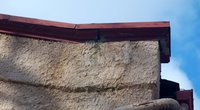
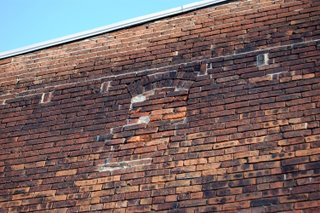
The north side of the building has interesting clues. The shadow lines of the former building C are obvious. The buildings were joined where the bricks seem out of place today (note the vertical bricks). Joists from building C would have been joined here.


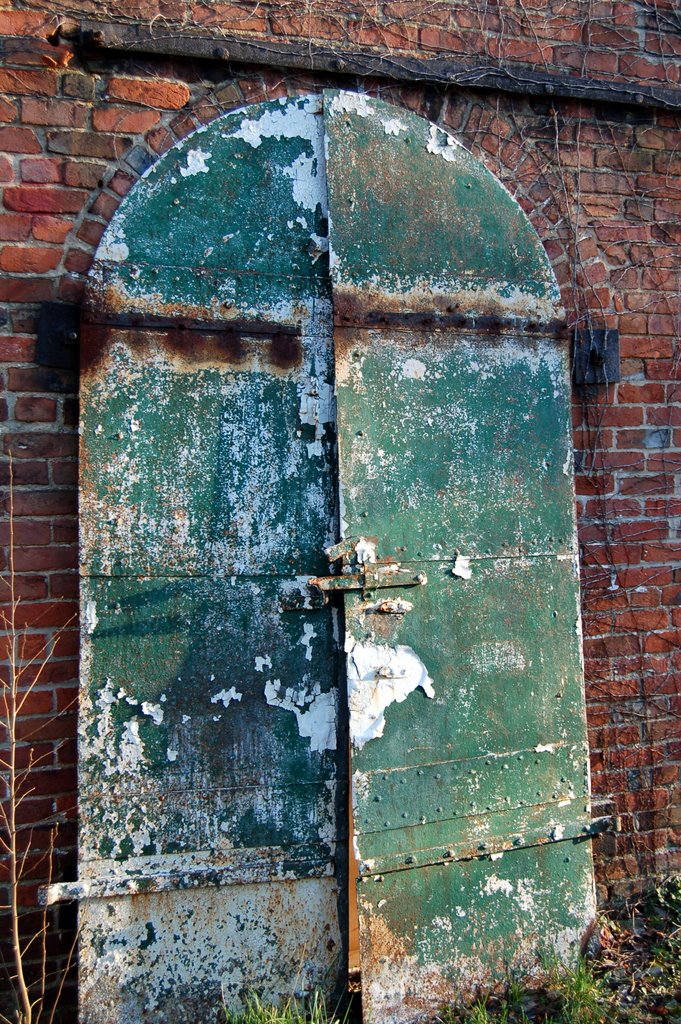
Two arched openings (on the first and second floor, now bricked in) would have provided access back and forth. Propped next to the first floor opening are two large metal doors that match the opening. They quite possibly could be the original doors.


There are also two smaller arched openings that have been bricked in. What was their purpose? Possibly ventilation or for water pipe entry. Building C contained a 12 horsepower steam engine. It was the heart of the brewery and would have been used to pump water as well as other mechanical purposes.

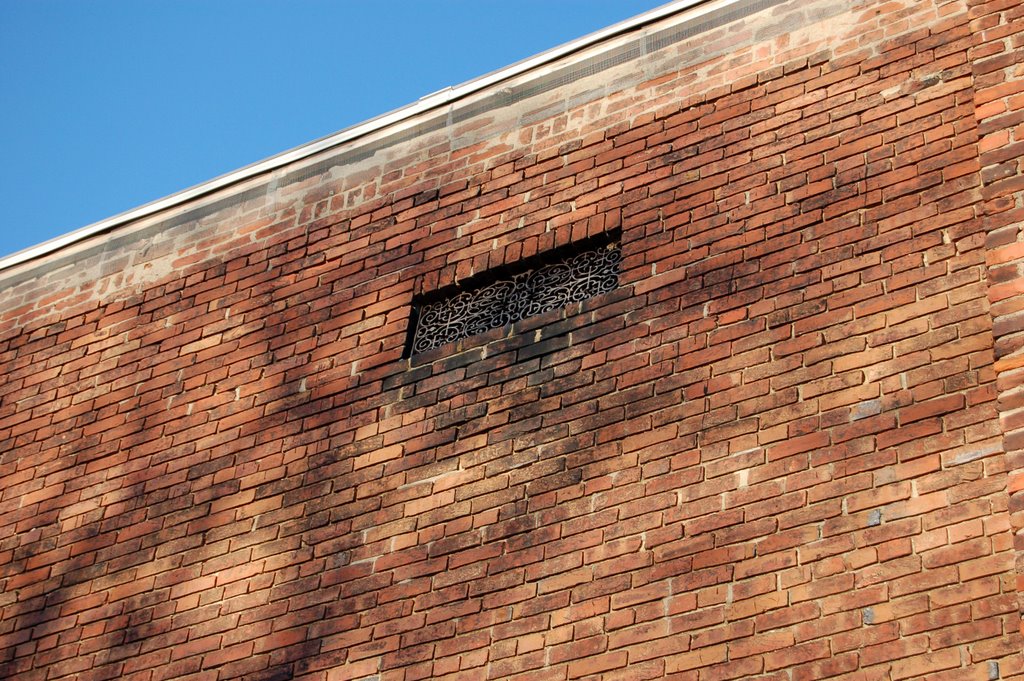
On the rear of the building, on the second floor, are two grated openings. This would have been consistent with the use of that floor as the grain room and the need for ventilation there.


This is where malt would have been made. As noted in the Ledger article (9/22/1875) in Part 1, the fire in 1875 resulted in the loss of considerable barely and malt. I think I can safely assume the brewery had the capacity to make their own malt, evidenced by the large amount of barely and malt lost in the fire. However, the 1886 map states the kiln is “not used”. It could be assumed they had ceased to make their own malt by 1886 and were purchasing it from a local malt house.

Building A (on the left below) is noted as the Ice House and Fermenting Cellar. A Part 3 post will be dedicated to that building.

I was lucky enough to visit the basement of this building recently. I am desperately seeking an old photo of the brewery site to determine if the building was original to the 1875 reconstruction after the fire. Right now, we are leaning heavily to the “yes” conclusion. There’s a lot of evidence that the building was modified in the 1920’s to its current condition but the structure itself dates to 1875. If anyone has any clues to pass on, please do.

The basement is very impressive and an obvious storage facility for large casks. One surprise in the basement is evidence of a vault below the floor. More on that in the next few days.

Wednesday, March 08, 2006

The Rise and Fall of Market Street Brewery (Part 1)

The recent news of development plans with the property at 10th and Market was great to hear. It’s also a commonly known fact that the site used to be a brewery. Luckily, I’d also recently acquired the book Louisville Breweries by Peter R. Guetig & Conrad D. Selle (get your copy at Destinations Booksellers today). Put all this together, along with a little curiosity on my part, and we’ve got the makings for another Our History posting.

The brewery was established by Peter Buchheit in 1856. It was known as Market Street Brewery. The Buchheit family lived in the home at the corner of 10th and Market (lost to fire in the 1990’s). The brewery operation was right outside their back door. The operation spanned nearly the entire block on the west side of 10th Street between Market and Spring Street.

Excerpts from an 1877 Ledger article provide a nice overview of the brewery operation.

The New Albany Ledger Standard, February 21st 1877

His (Mr. Buchheit) beer is known and greedily guzzled in New Albany and far beyond her confines. This gentleman has met with considerable misfortune by the destruction of his establishment in 1875 by fire. Being a man of great nerve he at once set about and rebuilt, and today has a larger and better brewery than ever. It is built mostly of brick, with iron roofs, and the arrangements and conveniences are better than formerly.

The brewery is complete in every department, and has capacity of making ten thousand barrels of beer annually. Last year Mr. B sold nearly 4,000 barrels, and paid the Government $1 each for the privilege. The best material is used for the manufacture of the beverage, the best barely, California hops, &c. A very convenient elevator is arranged in the main building, and grain and other articles are speedily and safely hoisted and lowered from and to the different floors and cellars.

Mr. B has expended a large sum of money and may be considered among the large manufacturers in the city. The large and deep cellars connected with this brewery are stored with lager made during the cold weather and it will be kept cool during the summer months by being completely surrounded by ice. The ice house at the brewery contains about 609 tons, and another on the Jeff railroad above the city contains fully 1,000 tons.

The fire referenced above is described in another Ledger article below.

The New Albany Ledger Standard, September 22nd 1875

This morning at 6 ½ o’clock, the alarm of fire was sounded and it was discovered that the extensive brewery of Peter Buchheit was on fire.

When the alarm was given the three engines, the Sanderson, Jefferson and Washington, were prompt in action, and did efficient work in subduing the flames, which required three quarters of an hour. The cause of the fire is not known.

The citizens gathered from all quarters and rendered timely assistance. The building contained two thousand bushels of malt and a quantity of barley. The basement was filled with beer, which will be damaged by becoming heated. The malt, which was consumed, is valued at $2,500, barley valued at $1,000.

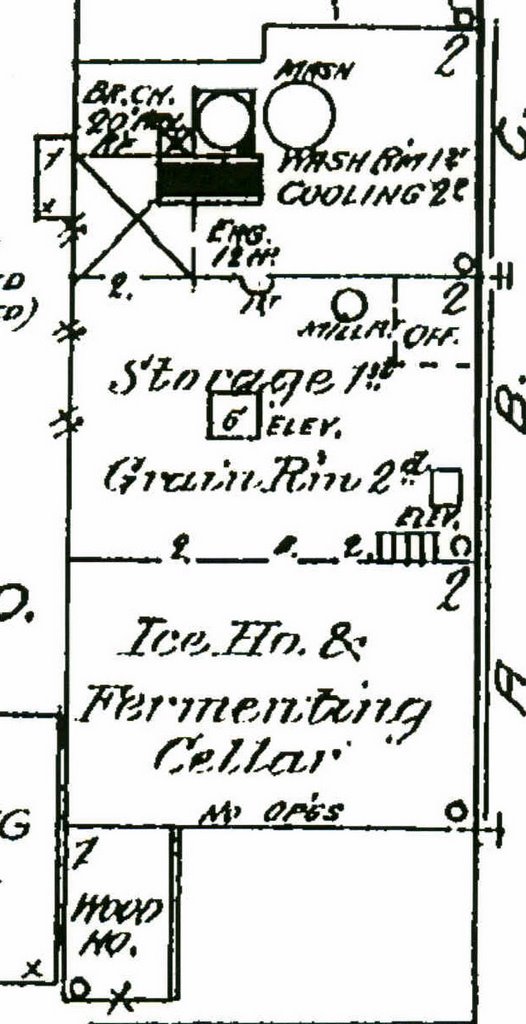
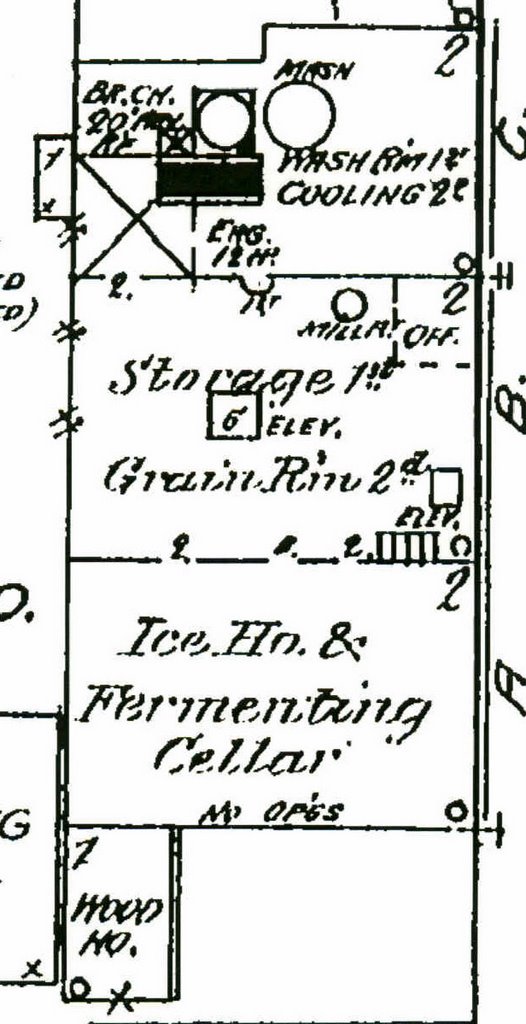
A snapshot of the Sanborn insurance map below (from 1886) shows the layout of the brewery in great detail (in 1884 the brewery had been acquired by Julius Gebhard and Company). The right side of the map is 10th Street and the bottom is Market.


You’ll note that in the lower middle of the image there’s a structure noted as a dancing hall. Also nearby is another structure noted as a saloon (this is 911 E. Market which is currently for sale – visit http://www.historicnewalbany.com/ to buy). A dance hall, saloon, and brewery all in close proximity – how cozy!

Here's a close up of the brewery operation.

In part 2 of this post we’ll examine the buildings on the site today (one structure there does remain from the brewery days), the evolution of the site and the brewery operation.